

WU-VISSER RESIDENCE (2)
Location - Chicago, IL
THE CHALLENGE
After outgrowing their previous home, our clients moved into a much larger single-family residence and once again brought us board for their renovation project.
The historic home features many distinctive architectural details, requiring a thoughtful design approach that would honor the character of the building while reflecting the clients’ personal style and contemporary needs.
As in their previous home, the kitchen was partially separated from the living area, creating a closed-off feel that limited the connection between the main living spaces.
THE SOLUTION
To create a more cohesive and inviting environment, we visually connected the kitchen and living areas by emphasizing the home's existing wood tones across both the flooring and ceiling. This continuity draws the spaces together, enhancing flow and openness while preserving the historic character of the home.
The result is a warm, unified living space that balances the home's architectural heritage with the clients' aesthetic preferences and modern lifestyle.
DESIGN PROCESS
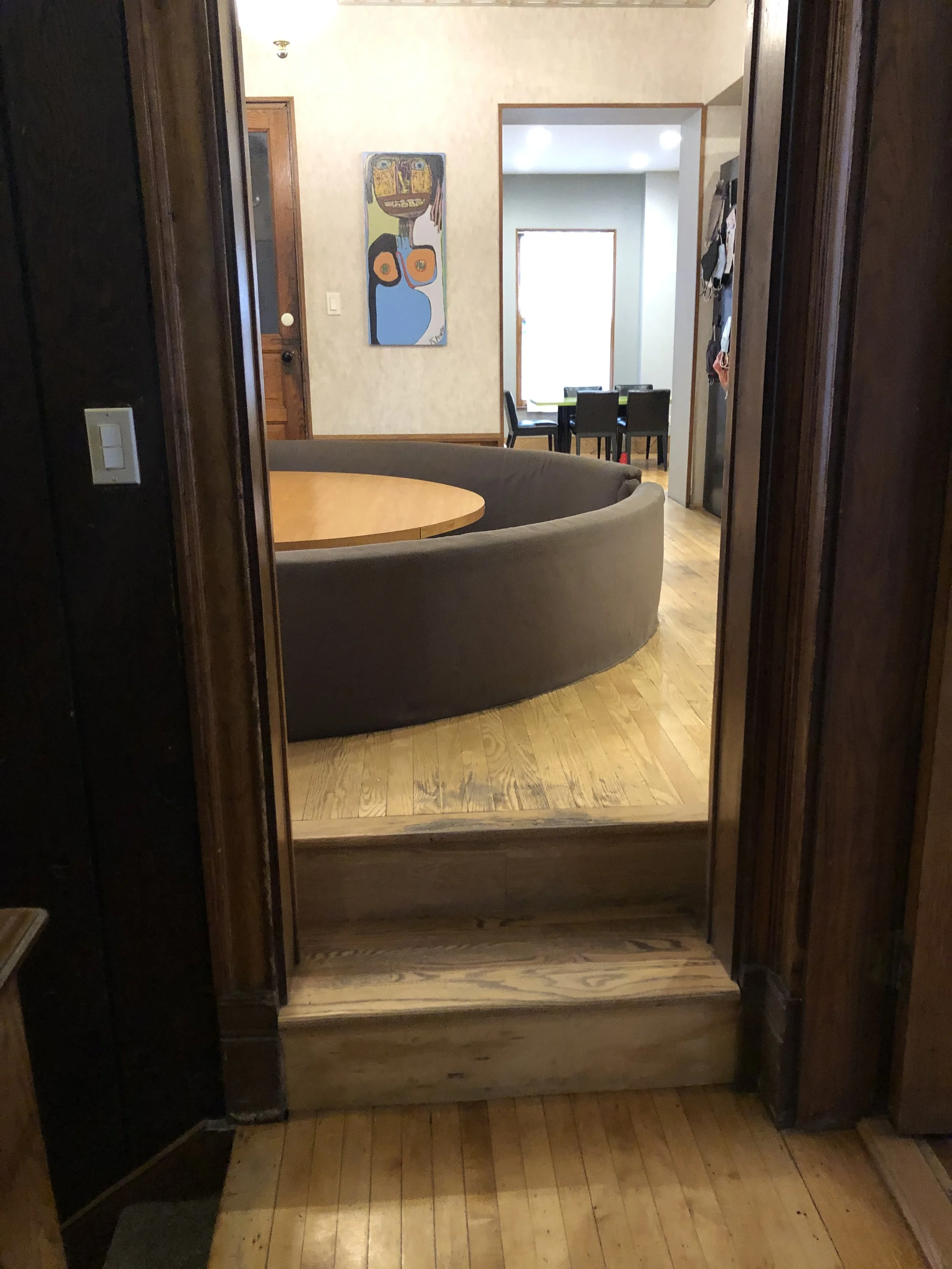
BEFORE
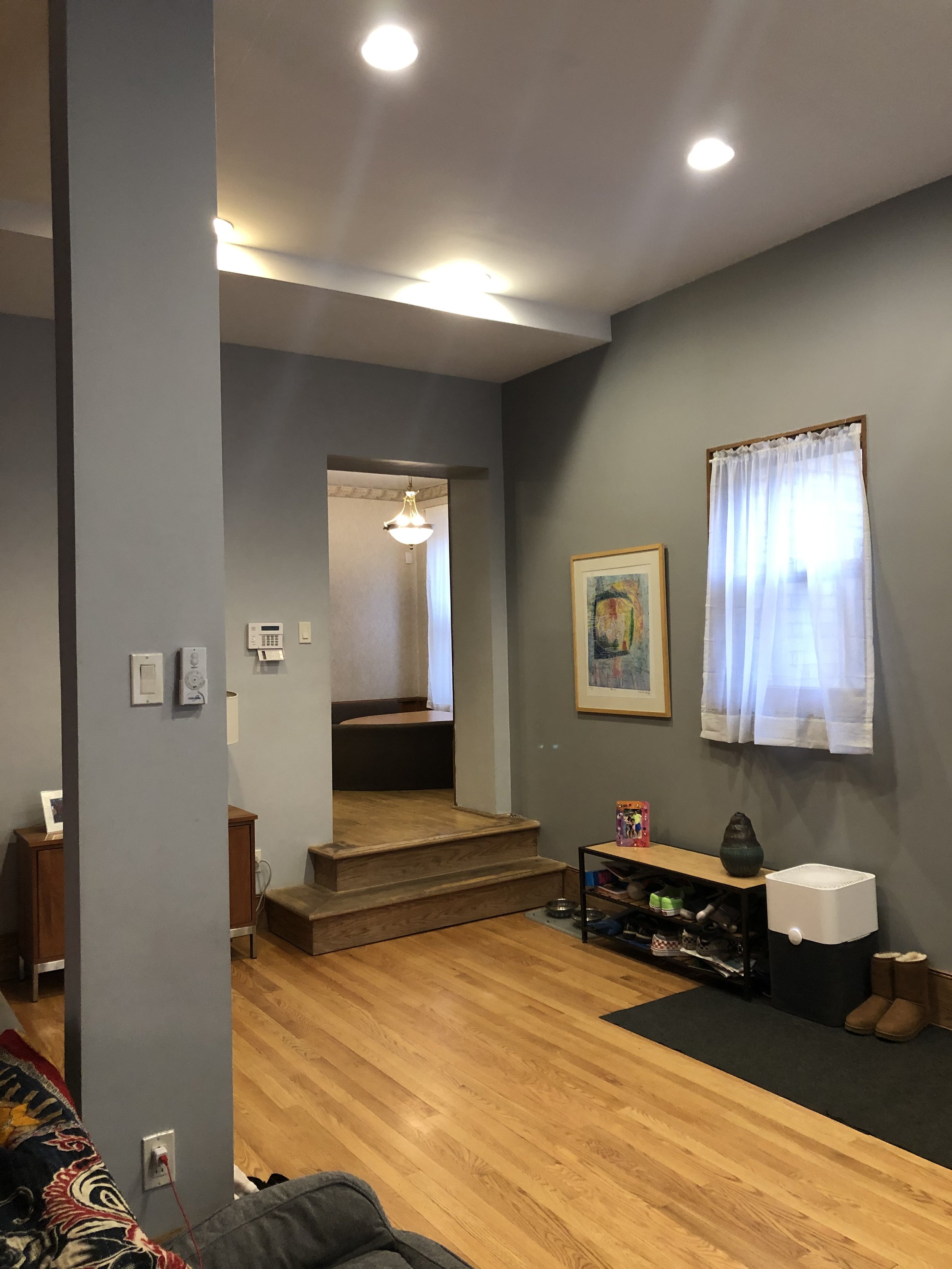
BEFORE
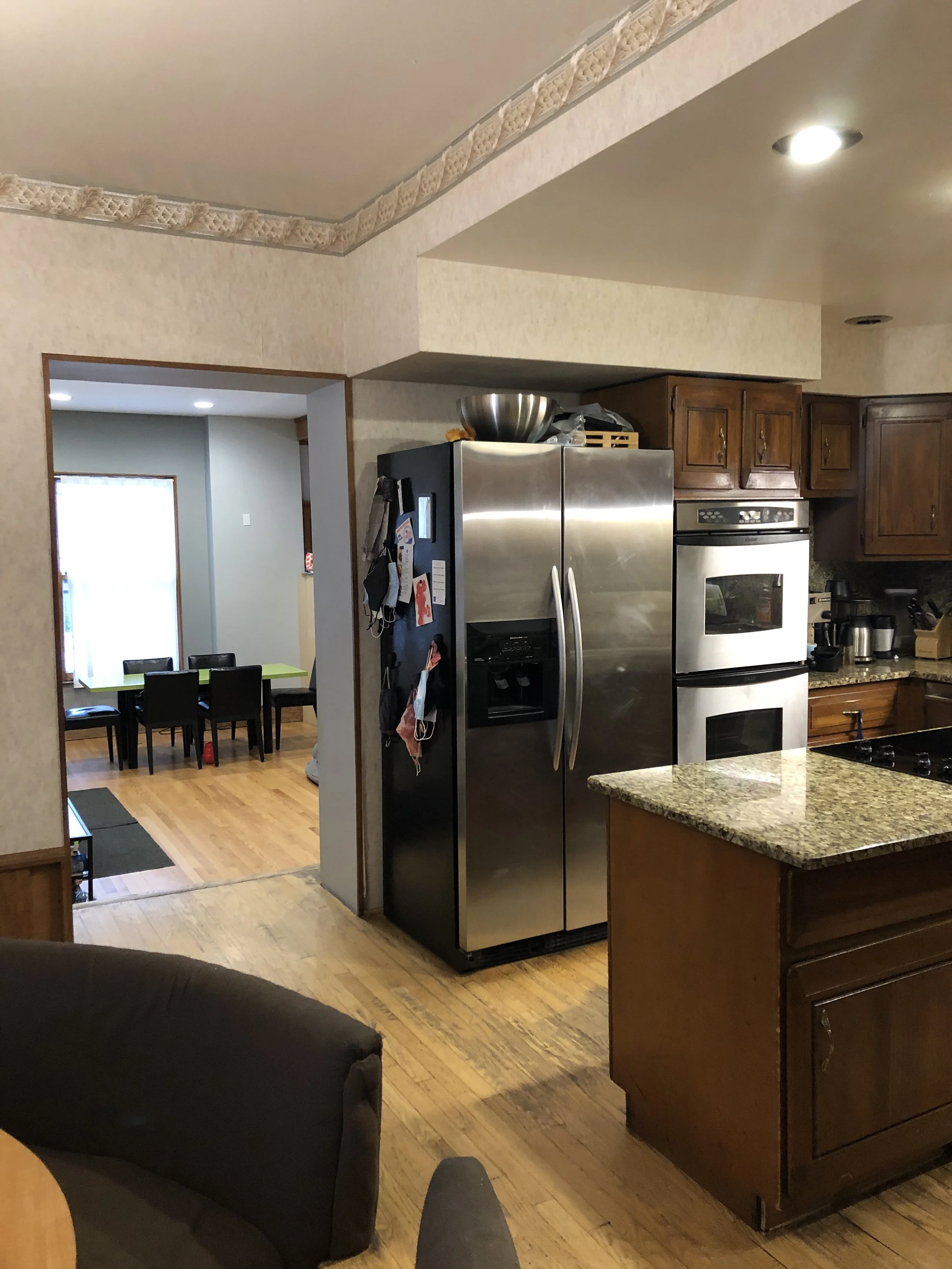
BEFORE
The kitchen was originally built on a raised platform, resulting in significantly lower ceiling height than the rest of the home. While the first floor enjoys generous 10-foot ceilings, the elevated kitchen reduced the available headroom and diminished the sense of openness and grandeur that defines the space.
In addition to impacting the spatial experience, the raised platform created a physical and visual separation between the kitchen and the adjacent living areas, making the home feel more compartmentalized and disconnected.
FINAL DESIGN
To improve the connection between the kitchen and the rest of the home, we removed the wall along the living room side that had previously concealed the kitchen from view. This immediately opened the space and strengthened the relationship between the primary living areas.
We also created a new opening to connect the adjacent sunroom, which had previously been underutilized and lacked a clear purpose. By integrating it with the kitchen, this light-filled space was transformed into a flexible extension of the home—serving as a breakfast room, dining area, reading nook, or gathering space depending on the family's needs.
One of our goals was to restore and celebrate the home's original decorative window, a beautiful architectural feature that had been lost within the previous kitchen layout. Historic details like this contribute to the home's unique character, and preserving them was an important part of the design process.
Today, the kitchen is bathed in natural light from three sides. The restored decorative window, together with the new connection to the sunroom and the large French doors with glass panels opening to the living room, allows daylight to flow freely throughout the space. The result is a bright, welcoming kitchen that feels both connected and true to the historic character of the home.


Photographer: Todd
General Contractor: Old Masters Construction